

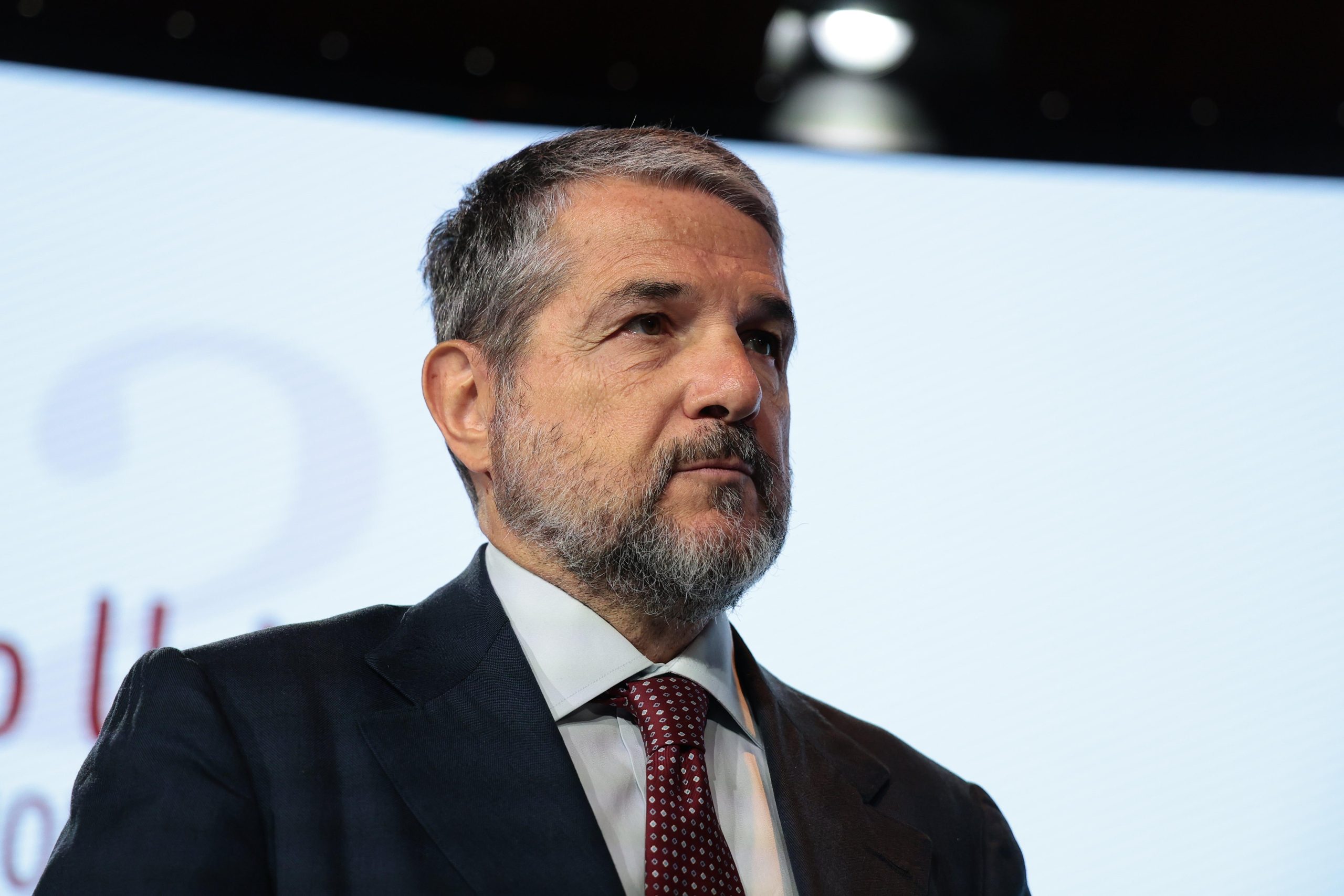
The Middle East conflict highlights a critical issue: tech fragmentation threatens shared democratic values . Valentini emphasizes the EU-US alliance is crucial for winning the global tech race, but Europe must address its weaknesses .
# Key Points Expanded
1. *Tech & Democracy Interlinked*: “Technological interoperability = democratic interoperability” . Incompatible digital systems lead to a world that stops communicating.
2. *Europe’s Challenge*: Europe has strengths (ASML, Galileo, quantum computing) but struggles to scale up . Fragmentation, limited venture capital, and protectionist regulation hinder competitiveness.
3. *Alliance is Indispensable*: The EU-US partnership is vital. Abandoning it means accepting irrelevance . Neither can win the tech race alone; cooperation is key.
4. *Europe Must Step Up*: Needs to mobilize private capital like US hyperscalers (Google, Amazon, etc.) . Should co-define tech standards with companies (“sovereignty by design”).
5. *Complex Cooperation*: Alliance involves governments, institutions, and private companies . Europe shouldn’t impose rules unilaterally nor surrender to platforms.

Valentini cites:
– Henry Kissinger: Nations learn when it’s too late; statesmen must act beforehand .
– Mario Draghi: Europe’s problem isn’t ideas but translating innovation to commercialization .
– Madeleine Albright: The US was “the indispensable nation”; now it’s the EU-US alliance that’s indispensable .
– Winston Churchill: Crises don’t wait; preventive statesmanship is key .
The transatlantic alliance endures when partners carry their share of the burden . Europe must act with pragmatism
Valentino Valentini’s speech underscores the urgency of the EU-US alliance amid tech competition . The Middle East conflict exposes risks of tech fragmentation hurting shared democratic values .
Technological interoperability isn’t just about tech; it’s about democratic values . Incompatible systems lead to disconnection. Europe and the US must build shared tech spaces to uphold the rule of law and international norms .
Europe has unique assets: ASML’s EUV machines, Galileo, Copernicus, quantum computing . Yet it struggles to create global-scale industrial champions due to fragmentation, capital access issues, and regulation prioritizing protection over competitiveness .
The EU-US alliance is indispensable . Abandoning it means ceding tech leadership to others. Cooperation is key to beating China in tech . Europe must examine its weaknesses and mobilize private capital .
Transatlantic cooperation involves complex dynamics . The alliance isn’t just governments; it’s states, institutions, and companies. Europe should pursue “sovereignty by design” – co-defining tech standards with companies .
In conclusion, the alliance endures with mutual strength . Europe must do its part with pragmatism. As Churchill warned, crises don’t wait .